Logline:

Audience:
Background:
Summary:
Characters and Location:
Inspiration Board:
A young woman in rural Poland must come to better understand herself and her heritage when her deep-buried secret conflicts sharply with her Catholic upbringing and culture.
Kupala Night will exist as an animated short film (running approximately 12 minutes) in either a 2D or stop motion animation style. It will resonate with audiences of all ages but is intended for teenagers and young adults while still being suitable for children (roughly ages 8 and up). It is set in the fantasy/folklore genre, but could also be labeled as dark fantasy.
Kupala Night arose from my own experiences relearning my Slavic heritage as a third generation American, but from arguably in the most anti-Polish way possible! I was raised Presbyterian rather than Catholic unlike the rest of my paternal Eastern European family, so when I did learn about my heritage growing up, it was all through folklore: Polish folk tales, Croatian fairytales, ancient Slavic gods and goddesses, and anything else I could get my hands on. It presented a faraway land where anything was possible, giving me zero framework for the realities of Poland’s national identity being heavily rooted in Catholicism and, at times, heavily opposed to their pagan past as a result. National identity intertwining so deeply with religious beliefs has resulted in everyday life and laws in Poland being dictated more by faith than fundamental rights for all regardless of religion, leading to practices such as the formation of “LGBT-free zones” between 2019 and 2024 across the country. In a period of my life where I was evolving and learning who I was, recognizing the injustice in these laws made a fundamental pillar of my identity shift drastically as I better understood this unexplored part of my heritage, but also stirred a question in me; what if Poland’s paganism served as a framework for national identity instead? My uniquely American perspective of my grandparent’s home country created a realm where gods could become goddesses or anything in between, and any form of love felt possible.
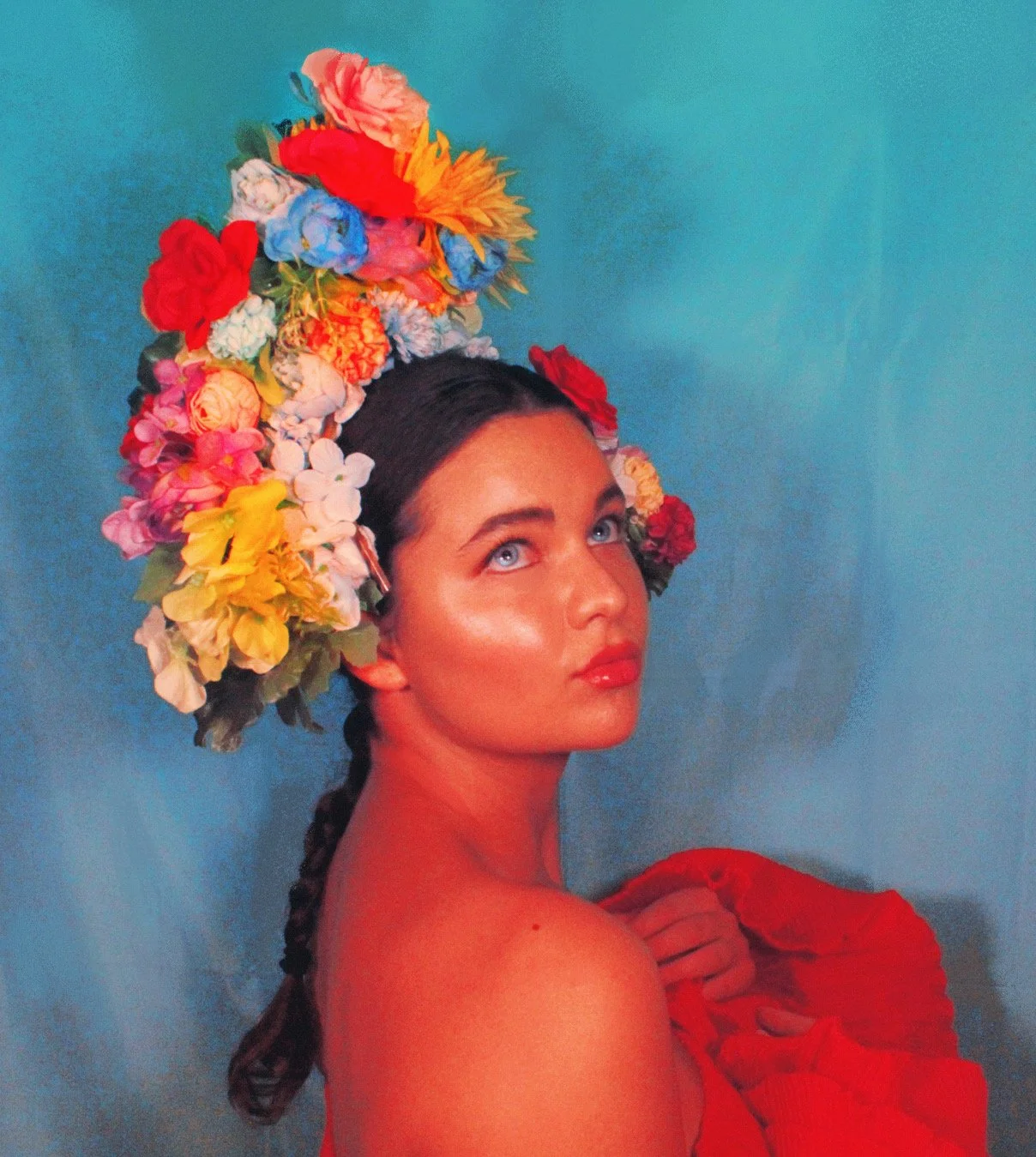
My first attempt at making a vinok/wianek, or flower crown. They are featured heavily in this short film!
Kupala Night centers around Milena, a young woman living in rural Poland on the night that is the film’s namesake, Kupala Night. It is a summer festival in Eastern Europe dedicated to love, and is also regarded as one of Poland’s most pagan surviving traditions. Many of the festivities involve courtship in some manner - giving flower wreaths away to a prospective partner or fire-jumping as a couple - but Milena, under Poland’s anti-LGBTQ+ policies, feels unable to share her love for her partner with the world. As she seeks out the fern flower - a mythical plant that only blooms on Kupala Night and will grant the finder true love, wealth and happiness - she is forced to confront the old gods and creatures of Poland in her journey in the woods, facing her fears and ultimately having to choose between freedom from her heritage or her true love.
Location: Rural Poland, heavily inspired by the village Zalipie.
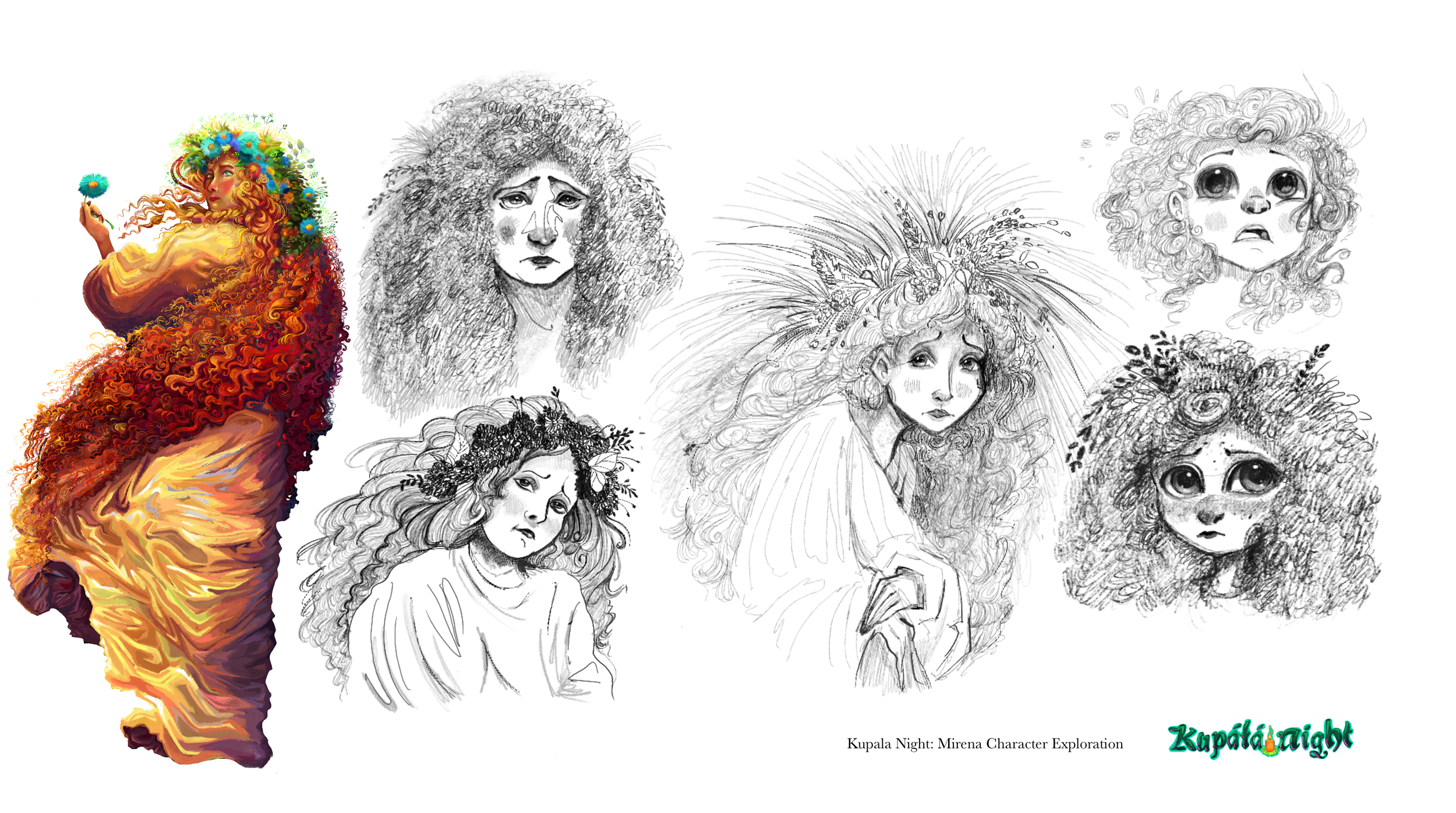
Milena: A shy and conflicted teenage girl residing in her parent’s cottage in rural Poland, who seeks out the magic of the fern flower to escape her community.
Zofia: Milena’s former girlfriend who had left their village with the promise to return for Milena, but has been reported missing.
Lado/Lada: The shapeshifting god/goddess of love, who Milena occasionally sees in prophetic visions and encounters in the woods.
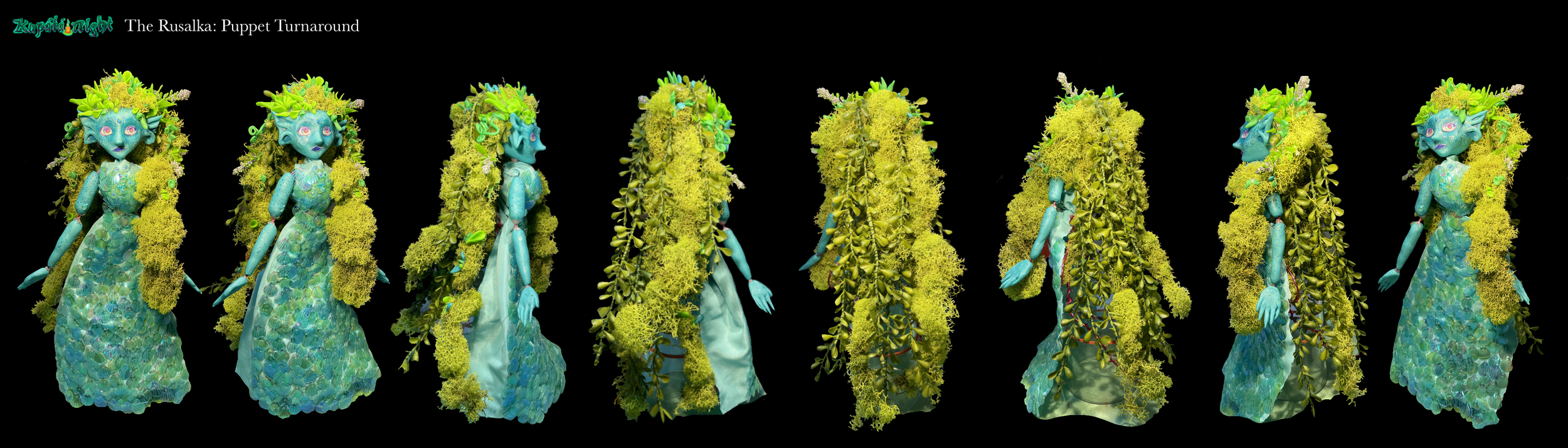
Domovoy, Rusalki , Kikamora, Leshies, and the Vodyanoy: Some of the many sprites, creatures, and demons that Milena encounters in the woods during her escape.
A
Kupala Night Concept Art: Milena’s Cottage
Kupala Night: Character Lineup Closeups
Kupala Night Concept Art: Milena’s Cottage, ext.